npm:lego-oracle
Is the npm:lego-oracle MCP server safe to use?
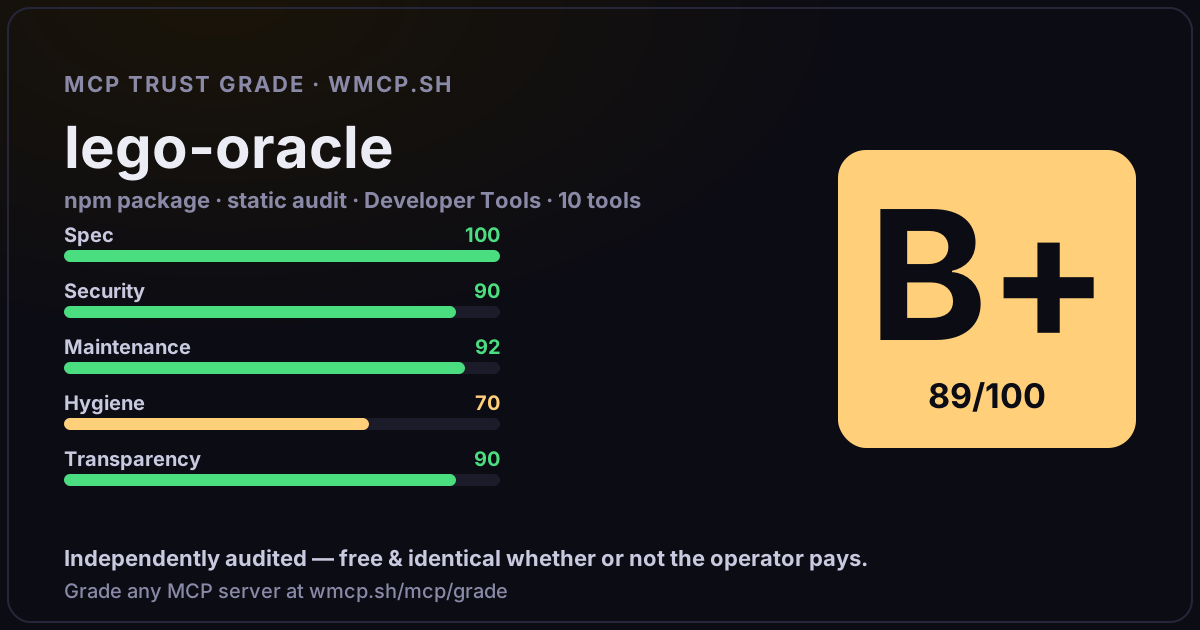
Independent trust grade B+ (89/100). Static analysis of npm package lego-oracle@0.1.2 (stdio server — no remote endpoint). Reliability/behavioral signals require running it; not measured. wmcp.sh continuously watches npm:lego-oracle for tool drift and rug-pulls. The grade is free and identical whether or not the operator pays.
What it offers — 10 tools · Developer Tools
search_setsSearch for LEGO sets by name, theme, year, or piece count. Use this when looking for sets matching specific criteria. Returns a summary list: use get_
get_setGet complete details for a specific LEGO set including piece inventory, minifigures, and theme. Use this when you know a set number (like 75192-1) or
search_partsSearch for LEGO parts by name, category, colour, or material. Use this when looking for specific brick types, plates, tiles, or other elements. Return
get_partGet complete details for a specific LEGO part including available colours and mold/print variants. Use this when you know a part number (like 3001) an
find_part_in_setsFind which LEGO sets contain a specific part, optionally in a specific colour. Use this when a builder wants to know where to source a particular bric
search_minifigsSearch for LEGO minifigures by name. Use this when looking for specific characters or minifig types. Returns fig numbers and names: use get_minifig fo
get_minifigGet complete details for a specific LEGO minifigure including every set it appears in. Use this when you know a minifig name or fig number and want to
browse_themesBrowse the LEGO theme hierarchy. With no input, returns all top-level themes with set counts. With a theme name, returns its sub-themes and sets. Use
find_mocsFind community alternate builds (MOCs) that can be made from a specific LEGO set\
compare_setsCompare 2 to 4 LEGO sets side by side. Shows piece count, year, theme, minifig count, and shared parts between sets. Use this when someone is deciding
- ✓ depends on an MCP SDK
- ✓ declares a bin entry (runnable server)
- ✓ 10 tool(s) detected in source
- no high-risk patterns in sampled source
- scanned 6 source files
- published within 90 days
- 3 published versions
- no TypeScript types
- 4 runtime deps
- ✓ public repository linked
- ✓ MIT license
Findings
We re-grade npm:lego-oracle on a schedule and alert your Slack/webhook the moment its tools change or its grade drops — rug-pull insurance for the connection.
Share this report card
A 1200×630 card with the grade + audit — drop it in a post, Slack, or your repo.
Embed this grade
A live badge — it re-verifies itself and shows current stability. Static scorecards can't. Paste it in your README or site to show users you're independently audited.
[](https://wmcp.sh/mcp/grade/npm%3Alego-oracle)
<a href="https://wmcp.sh/mcp/grade/npm%3Alego-oracle"><img src="https://wmcp.sh/mcp/grade/npm%3Alego-oracle/badge.svg" alt="MCP Trust Grade B+ · wmcp.sh"></a>
Agents: check this before connecting
Add the wmcp.sh trust oracle as an MCP server and call grade_mcp_server / check_mcp_drift in your agent's pre-connection gate:
https://wmcp.sh/mcp/trust
readOnly vs observed behavior) layer on via the wmcp.sh proxy.