npm:@vallt/mcp-server
Is the npm:@vallt/mcp-server MCP server safe to use?
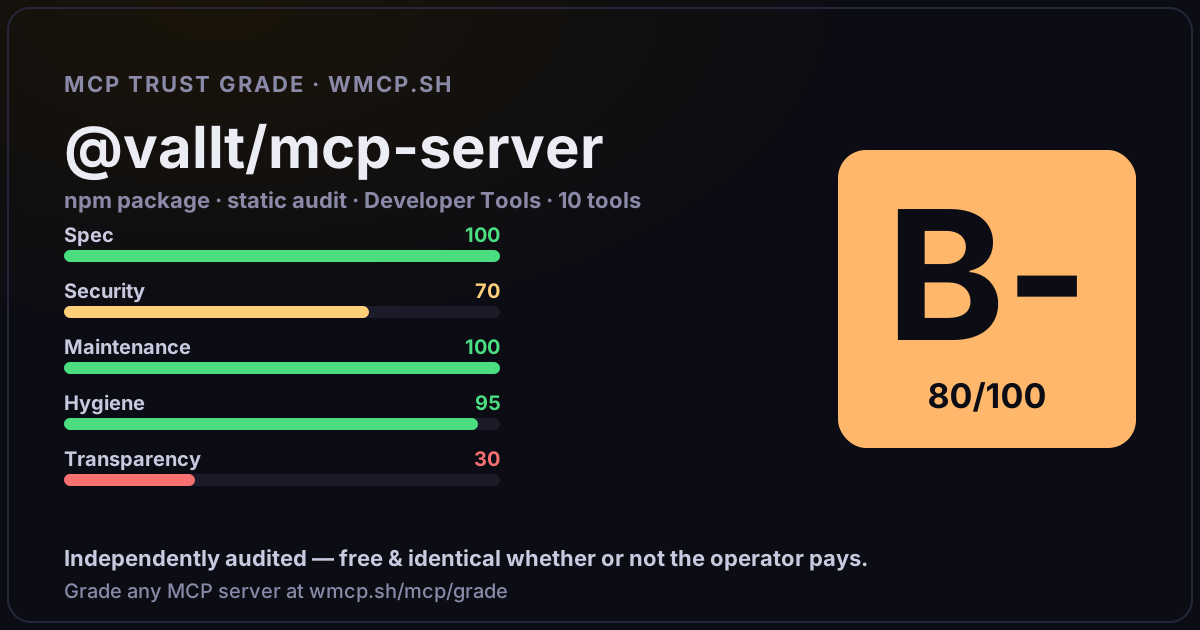
Independent trust grade B- (80/100). Static analysis of npm package @vallt/mcp-server@0.0.37 (stdio server — no remote endpoint). Reliability/behavioral signals require running it; not measured. wmcp.sh continuously watches npm:@vallt/mcp-server for tool drift and rug-pulls. The grade is free and identical whether or not the operator pays.
What it offers — 10 tools · Developer Tools
vlt_connect_integrationStart the guided integration flow for a third-party service (e.g. Stripe, Supabase, Twilio). Call without keys first to get setup instructions, then c
vlt_get_secretCheck whether a secret is available in the local vallt for a given service. Never exposes the raw value — only confirms availability.
vlt_list_integrationsList all connected integrations for the current project, with status and recommended next steps.
vlt_get_project_contextFetch the full project context — build type, stack, connected integrations, recommended next. Call this at the start of a session to understand what
vlt_inject_envPush all connected integration secrets into the project
vlt_validate_tokenCheck auth status and subscription tier. Surfaces an upgrade prompt if the free tier is exhausted. Run this after pasting a new API token.
vlt_health_checkCheck whether connected integrations are still valid. Re-validates each key against its service and surfaces degraded tokens with specific remediation
vlt_scan_envScan .env files in the current directory for security issues: secrets not gitignored, test keys in production, unfilled placeholders, and services tha
vlt_import_envScan .env files in the current project, detect existing API keys for known services, validate them, and import them into Vallt in one shot. Use this w
vlt_disconnect_integrationRemove a connected integration from Vallt — deletes the keys from the OS keychain and frees up the integration slot. Use this to swap out a service or
- ✓ depends on an MCP SDK
- ✓ declares a bin entry (runnable server)
- ✓ 10 tool(s) detected in source
- uses eval/exec/child_process (review for unsanitized input)
- scanned 6 source files
- published within 90 days
- 37 published versions
- ✓ ships TypeScript types
- 4 runtime deps
- no repository link
- no license declared
- 66 weekly downloads
Findings
We re-grade npm:@vallt/mcp-server on a schedule and alert your Slack/webhook the moment its tools change or its grade drops — rug-pull insurance for the connection.
Share this report card
A 1200×630 card with the grade + audit — drop it in a post, Slack, or your repo.
Embed this grade
A live badge — it re-verifies itself and shows current stability. Static scorecards can't. Paste it in your README or site to show users you're independently audited.

[](https://wmcp.sh/mcp/grade/npm%3A%40vallt%2Fmcp-server)
<a href="https://wmcp.sh/mcp/grade/npm%3A%40vallt%2Fmcp-server"><img src="https://wmcp.sh/mcp/grade/npm%3A%40vallt%2Fmcp-server/badge.svg" alt="MCP Trust Grade B- · wmcp.sh"></a>
Agents: check this before connecting
Add the wmcp.sh trust oracle as an MCP server and call grade_mcp_server / check_mcp_drift in your agent's pre-connection gate:
https://wmcp.sh/mcp/trust
readOnly vs observed behavior) layer on via the wmcp.sh proxy.