npm:@usecomposer/mcp
Is the npm:@usecomposer/mcp MCP server safe to use?
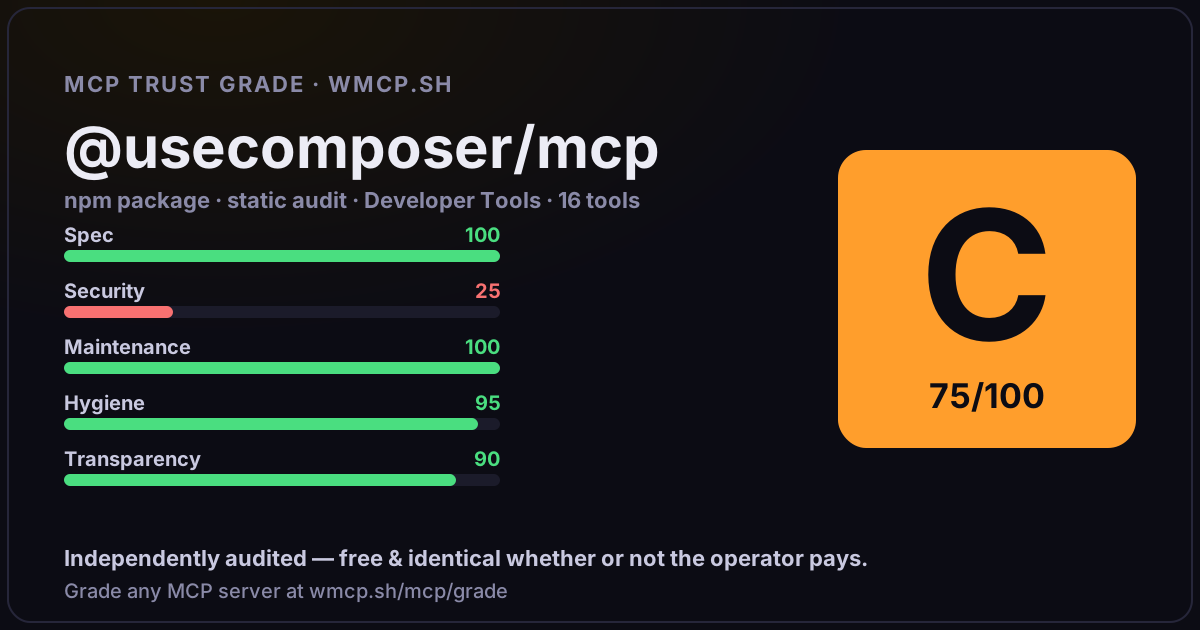
Independent trust grade C (75/100). References sensitive file paths / environment secrets. wmcp.sh continuously watches npm:@usecomposer/mcp for tool drift and rug-pulls. The grade is free and identical whether or not the operator pays.
What it offers — 16 tools · Developer Tools
get_graphGet the full architecture diagram -all nodes and edges.
get_nodeGet full details for a single node including connected edges.
upsert_nodeCreate or update an architecture node on the diagram.
upsert_edgeCreate or update a connection between two nodes.
define_apiDefine API endpoints on a service node (full replacement).
delete_elementDelete a node or edge from the diagram.
link_pathLink a node to a file or folder path in the codebase.
get_guideGet the Composer reference guide -node types, edge protocols, completeness criteria, and available tools. Call this BEFORE creating or modifying any n
plan_importGet the step-by-step workflow for importing a codebase into Composer. Call this when about to scan a repository and recreate its architecture as a dia
search_graphSearch the diagram for nodes and edges matching a keyword. Searches names, descriptions, tags, paths, endpoints, entities, edge labels, and data flows
verify_diagramCheck the diagram for completeness issues -orphaned nodes, missing endpoints/entities/descriptions, edges without data_flow. Call after building to ca
list_diagramsList all diagrams accessible to you. Call this first to find which diagram to work on.
create_diagramCreate a new diagram and auto-select it for this session.
select_diagramSelect which diagram to work on for this session.
rename_diagramRename the currently selected diagram.
get_screenshotGet a base64-encoded PNG thumbnail of the diagram captured during the last auto-save in the Composer UI.
- ✓ depends on an MCP SDK
- ✓ declares a bin entry (runnable server)
- ✓ 16 tool(s) detected in source
- ⚠ references sensitive file paths / env secrets
- scanned 4 source files
- published within 90 days
- 8 published versions
- ✓ ships TypeScript types
- 7 runtime deps
- ✓ public repository linked
- ✓ MIT license
- 13 weekly downloads
Findings
We re-grade npm:@usecomposer/mcp on a schedule and alert your Slack/webhook the moment its tools change or its grade drops — rug-pull insurance for the connection.
Share this report card
A 1200×630 card with the grade + audit — drop it in a post, Slack, or your repo.
Embed this grade
A live badge — it re-verifies itself and shows current stability. Static scorecards can't. Paste it in your README or site to show users you're independently audited.

[](https://wmcp.sh/mcp/grade/npm%3A%40usecomposer%2Fmcp)
<a href="https://wmcp.sh/mcp/grade/npm%3A%40usecomposer%2Fmcp"><img src="https://wmcp.sh/mcp/grade/npm%3A%40usecomposer%2Fmcp/badge.svg" alt="MCP Trust Grade C · wmcp.sh"></a>
Agents: check this before connecting
Add the wmcp.sh trust oracle as an MCP server and call grade_mcp_server / check_mcp_drift in your agent's pre-connection gate:
https://wmcp.sh/mcp/trust
readOnly vs observed behavior) layer on via the wmcp.sh proxy.