npm:@misarblog/mcp
Is the npm:@misarblog/mcp MCP server safe to use?
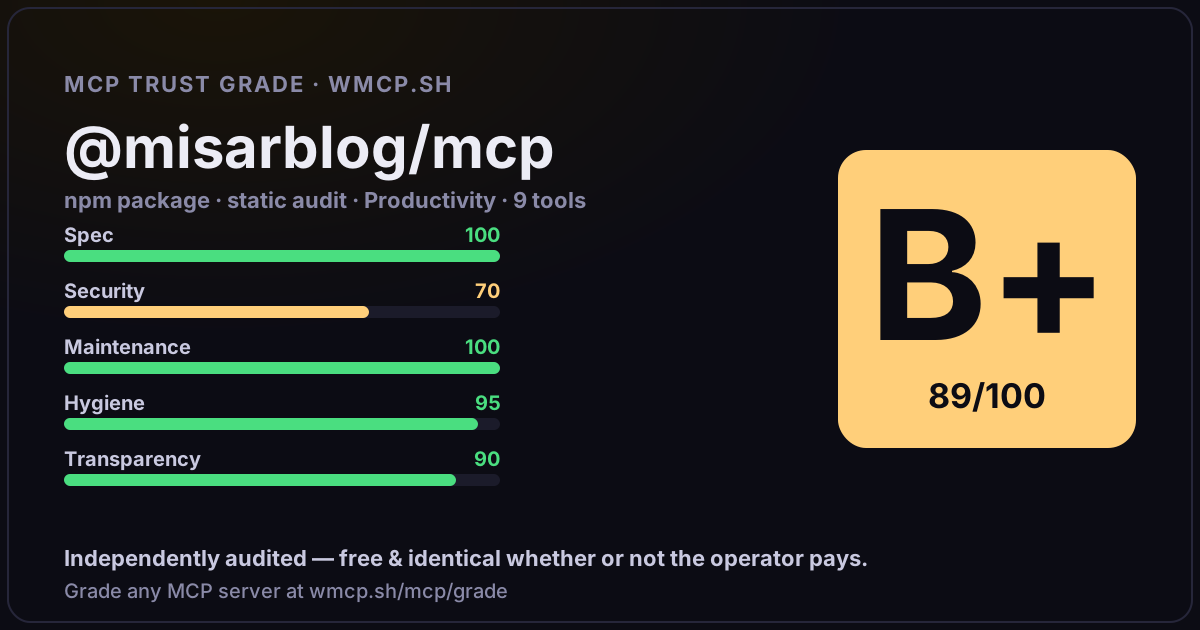
Independent trust grade A (93/100). Static analysis of npm package @misarblog/mcp@5.1.2 (stdio server — no remote endpoint). Reliability/behavioral signals require running it; not measured. wmcp.sh continuously watches npm:@misarblog/mcp for tool drift and rug-pulls. The grade is free and identical whether or not the operator pays.
- ✓ depends on an MCP SDK
- ✓ declares a bin entry (runnable server)
- no tools detected in sampled source
- no high-risk patterns in sampled source
- scanned 6 source files
- published within 90 days
- 13 published versions
- ✓ ships TypeScript types
- 2 runtime deps
- ✓ public repository linked
- ✓ MIT license
- 326 weekly downloads
Findings
We re-grade npm:@misarblog/mcp on a schedule and alert your Slack/webhook the moment its tools change or its grade drops — rug-pull insurance for the connection.
Share this report card
A 1200×630 card with the grade + audit — drop it in a post, Slack, or your repo.
Embed this grade
A live badge — it re-verifies itself and shows current stability. Static scorecards can't. Paste it in your README or site to show users you're independently audited.

[](https://wmcp.sh/mcp/grade/npm%3A%40misarblog%2Fmcp)
<a href="https://wmcp.sh/mcp/grade/npm%3A%40misarblog%2Fmcp"><img src="https://wmcp.sh/mcp/grade/npm%3A%40misarblog%2Fmcp/badge.svg" alt="MCP Trust Grade A · wmcp.sh"></a>
Agents: check this before connecting
Add the wmcp.sh trust oracle as an MCP server and call grade_mcp_server / check_mcp_drift in your agent's pre-connection gate:
https://wmcp.sh/mcp/trust
readOnly vs observed behavior) layer on via the wmcp.sh proxy.